NIR Treatment in Tirana for Non-Surgical Skin Tightening
Harmony NIR treatment in Tirana uses near-infrared light at controlled power to heat the dermis and support collagen remodelling. It is a non-ablative procedure for people who want to improve mild or moderate skin laxity without surgery or damaging the skin surface.
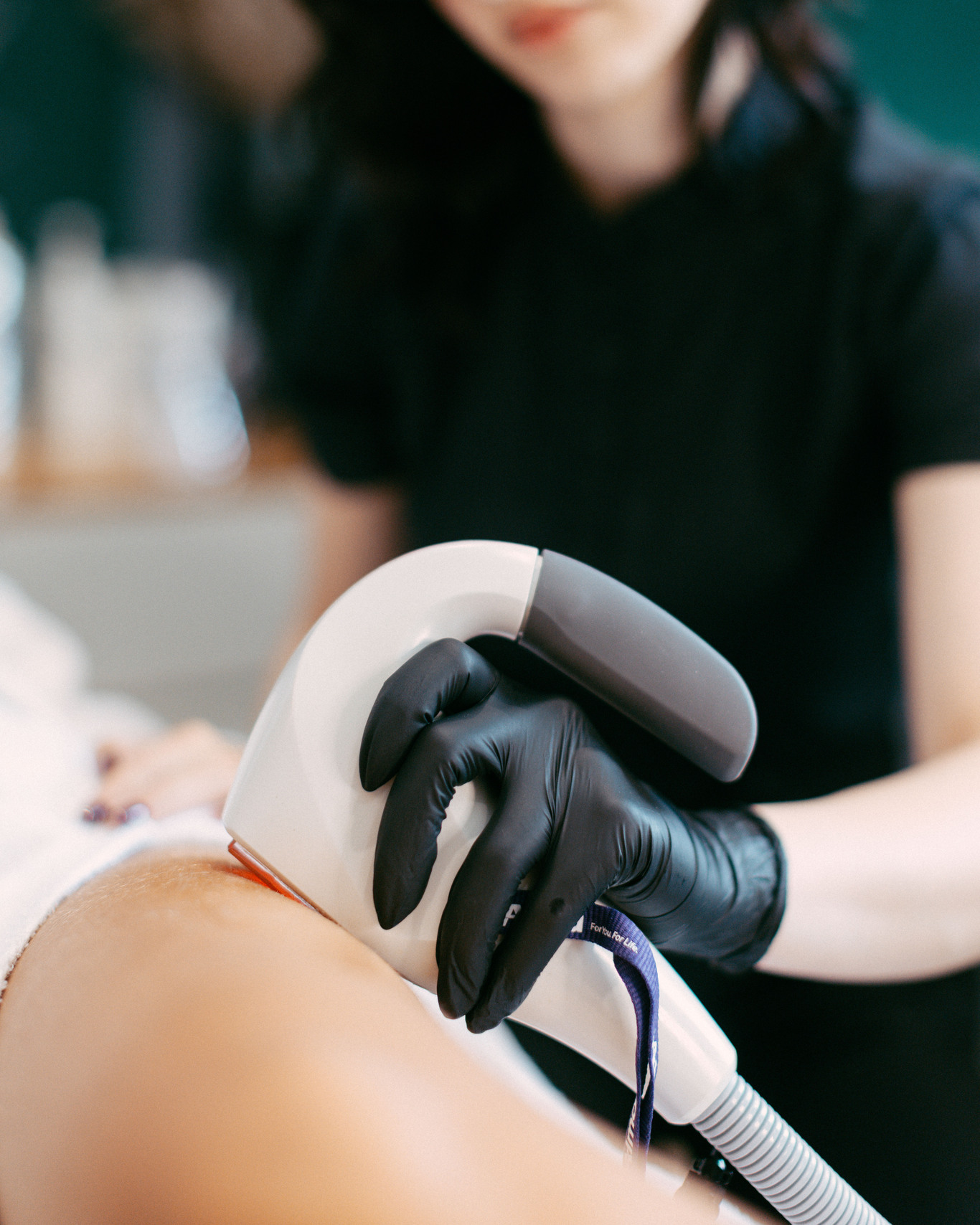
NIR may be used on the face, jawline, neck, décolletage and selected body areas such as the abdomen, arms, inner thighs or the area above the knees. The intended result is gradual and natural: firmer, more elastic skin with a more even appearance.
NIR is not a treatment for weight loss, fat removal or a surgical facelift. At Eden Laser Clinic, every plan begins with a consultation and is adapted to the degree of laxity, treatment area, skin quality and expectations.
On this page
How does NIR work for skin tightening? The intended result is gradual and natural What can NIR improve? What happens during an NIR session? Frequently asked questions about NIR treatment
How does NIR work for skin tightening?
Controlled heating of the dermis
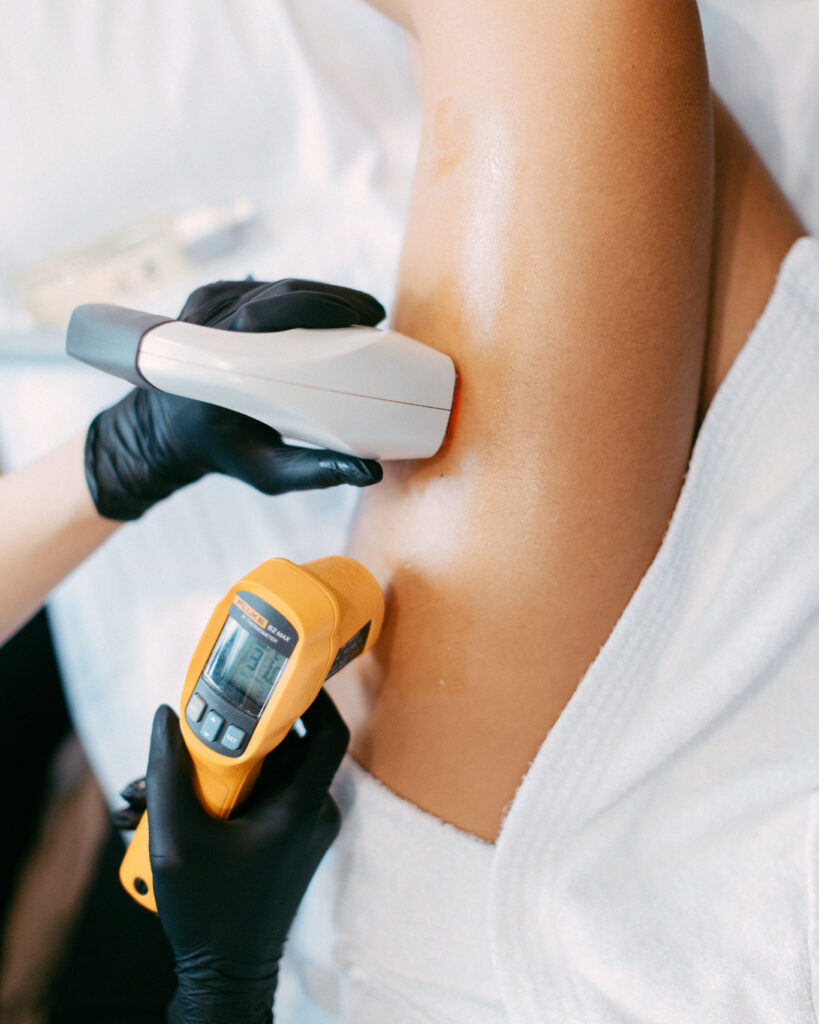
The applicator moves continuously across the area, distributing energy evenly. The temperature gradually increases to the therapeutic level defined by the protocol. The skin surface is not removed, and no micro-openings are created as with ablative fractional lasers.
Heating must be monitored throughout the session. If the patient feels excessive heat or pain, application is stopped or the settings are adjusted. Even a non-ablative treatment involves risks that are discussed during the consultation.
The intended result is gradual and natural
Contraction of existing fibres
Controlled heat may cause temporary contraction of collagen fibres. This may create a tighter sensation or appearance immediately after the session. The early effect should not be equated with the final result and may vary between patients.
Gradual collagen remodelling
The thermal response may encourage collagen formation and reorganisation over the weeks and months after treatment. Improvement is usually gradual and more subtle than the results of surgery, invasive radiofrequency or more intensive procedures.
Alma’s documentation describes NIR as a source that heats the dermis, contracts existing fibres and stimulates new collagen. However, clinical evidence for infrared devices varies according to the technology, protocol and area; results therefore vary from person to person.
What can NIR improve?
Facial skin laxity and the jawline
NIR may be used for mild loss of firmness in the cheeks, lower face and jawline. The aim is to improve skin quality and support, rather than surgically change contours or restore lost volume.
If the main concern is volume loss, significant tissue sagging or excess skin, another option may be needed.
Neck and décolletage
The neck and décolletage may show an early loss of elasticity, fine wrinkles and sun damage. NIR may support gradual skin tightening in these areas. Pigmentation or surface texture may require Dye-VL, ClearLift, a chemical peel or another treatment.
Abdomen, arms, thighs and above the knees
The body applicator may be used for loose skin on the abdomen, upper arms, inner thighs or above the knees. Results depend on tissue thickness, degree of laxity, age, weight and initial elasticity.
NIR does not automatically reduce fat and does not replace surgery after significant weight loss. For cellulite, localised fat and contouring, read about Accent Prime for body contouring and cellulite.
Fine lines and skin quality
Collagen remodelling may soften the appearance of some fine lines and make the skin look firmer and smoother. NIR is not a resurfacing treatment and does not treat deep scars, pronounced wrinkles or pigmented lesions through the same mechanism as CO2, ClearLift or Dye-VL.
What happens during an NIR session?
01
Consultation and assessment
The specialist assesses the degree of laxity, skin thickness and quality, the area, previous procedures, sun exposure, medications and general health. Treatment goals and limitations are discussed.
A small test may be performed before a full session, particularly when treating a more sensitive skin phototype or area. Tell the specialist if you have an active infection, impaired sensitivity to heat, conditions that affect healing or recent procedures in the same area.
02
During treatment
The area is cleansed and an appropriate medium is applied to allow the applicator to move. Protective eyewear is provided. The applicator moves continuously across a defined surface, gradually increasing dermal temperature.
The patient feels warmth that should remain tolerable. Communication during the procedure is important. A session usually lasts around 30–40 minutes, but the time varies according to the area and protocol.
03
Aftercare
Temporary mild redness, warmth, sensitivity or swelling may occur after treatment. Most patients can return to their usual activities, but individual responses vary.
For around 24 hours, or as instructed, avoid saunas, steam, very hot baths and strenuous exercise. Use sun protection, moisturisers and gentle products. Do not add heat or other procedures to the area without approval; contact the clinic if you experience increasing pain, blisters or an unusual reaction.
Who is a suitable candidate?
NIR may be an option for people with mild or moderate laxity who want a non-invasive procedure and accept gradual results. A suitable candidate has realistic expectations and understands that treatment improves skin quality but does not remove excess skin.
Results may be more limited with severe laxity, after significant weight loss or when the main issue is lost volume, localised fat or muscle weakness.
When might NIR not be recommended?
Treatment may be postponed if there is an infection, wound, inflammation, recent tan or sunburn. Disclose any impaired sensitivity to heat, medication or condition affecting light and heat tolerance, as well as recent treatments that have not fully healed. Pregnancy and other health conditions require individual assessment.
This list is not exhaustive. Do not stop medications without guidance from the prescribing doctor.
Why choose Eden Laser Clinic for Harmony NIR?
Eden Laser Clinic uses the NIR applicator of the Harmony XL PRO platform. The consultation determines whether your concern is related to skin laxity, volume loss or fat. The protocol is adapted to the area and elasticity, with warmth and comfort monitored. When needed, ClearLift, Accent Prime or Skin Booster are compared, and pre- and post-treatment instructions are provided.
Also explore the the skin concerns we treat or book a consultation to determine whether NIR is the right treatment.
Frequently asked questions about NIR treatment
What is NIR treatment?
NIR is a near-infrared light treatment that heats the dermis in a controlled way. It targets contraction of existing fibres and gradual collagen remodelling.
Is NIR a laser or LED?
The Harmony NIR applicator is a high-power infrared light source with a thermal effect. It is not a traditional laser and should not be confused with low-level LED masks or cold red-light therapy.
What does NIR treat?
It is used mainly for mild or moderate skin laxity on the face, neck, décolletage and selected body areas.
Does NIR replace a surgical facelift?
No. NIR may gradually improve skin firmness, but it does not remove excess skin or reposition tissues as surgery does.
Does NIR treat cellulite?
NIR may improve skin firmness in an area, but it should not be presented as the primary treatment for cellulite. The Accent Prime page is more relevant to this concern.
Does NIR reduce fat?
NIR should not be advertised as a weight-loss or fat-removal procedure. Its main focus is the skin and collagen.
Which areas can be treated?
The face, jawline, neck, décolletage, abdomen, arms, inner thighs and the area above the knees may be assessed for treatment.
Is treatment painful?
You feel warmth that should remain tolerable. If the heat becomes uncomfortable or painful, tell the specialist immediately.
How long does an NIR session last?
Usually around 30–40 minutes, but the time varies according to the area and protocol.
How many sessions are needed?
The number is determined individually. A course of treatments may be recommended; four sessions may be used as a guide only if this matches the clinic’s actual protocol.